
Introduction
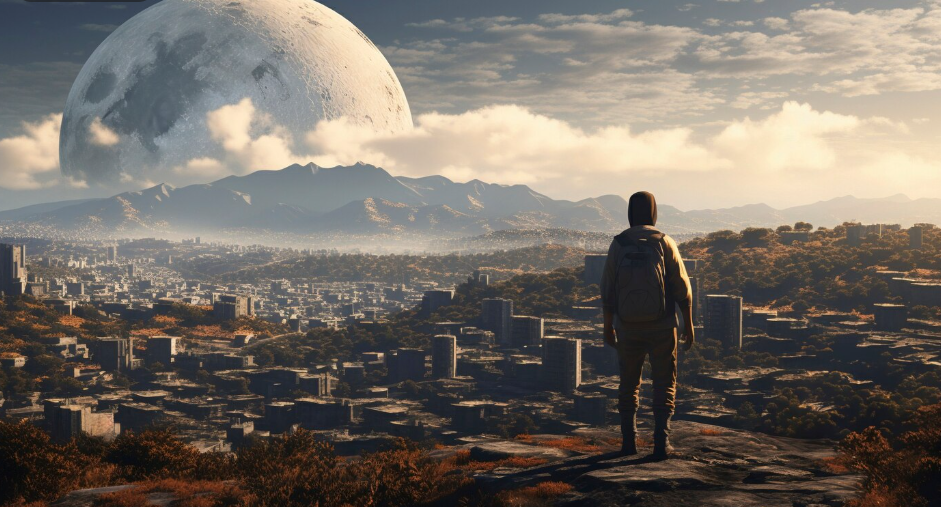
Imagine entering a virtual world where civilizations rise and fall, forests grow, economies fluctuate, and political alliances change—even when no players are online. This is the promise of world state persistence, an innovative approach to game design that allows digital environments to maintain their history and evolve independently of player activity.
Unlike traditional games that reset environments or pause events when players disconnect, persistent worlds preserve meaningful changes and create the impression of a living universe. This approach is transforming how developers think about immersion, storytelling, and player engagement.
What Is World State Persistence?
World state persistence refers to a game’s ability to retain and update the condition of its virtual environment over time. These changes may include environmental conditions, character relationships, economic developments, territorial control, and historical events.
In conventional games, the world often revolves around the player’s actions. When the player leaves, meaningful progression may stop. Persistent world systems take a different approach by allowing selected processes to continue without direct player involvement.
For example, a village might expand into a trading city, a neglected fortress could collapse, or two rival factions might negotiate peace while players are offline.
The result is a virtual universe that feels less like a static playground and more like an independent ecosystem.
How Living Game Universes Continue Evolving
Creating a world that changes without active players requires interconnected systems capable of generating believable developments.
1. Autonomous NPC Behavior
Non-player characters are essential to persistent virtual worlds. Instead of following only predetermined scripts, advanced NPC systems can respond to changing circumstances.
Merchants may adjust their inventory based on supply shortages, farmers might react to seasonal conditions, and political leaders could make decisions that influence entire regions.
These independent behaviors help create a world that appears active beyond the player’s immediate surroundings.
2. Dynamic Environmental Systems
Environmental persistence introduces natural changes that continue over time.
Forests may regenerate after harvesting, abandoned settlements can become overgrown, and weather patterns might affect agricultural production.
Developers can connect these environmental systems to gameplay. A prolonged drought, for instance, could reduce food supplies, increase market prices, and trigger migration between settlements.
Such interactions make the environment an active participant in the game’s broader narrative.
3. Independent Economic Systems
A living universe benefits from an economy that responds to simulated production, consumption, and trade.
Resources can become scarce, transportation routes may change, and settlements might develop specialized industries.
When players return after an absence, they could discover that familiar products have become expensive or that a previously insignificant trading post has grown into a commercial center.
These developments encourage exploration and adaptation.
The Technology Behind Persistent Worlds
Building autonomous universes requires more than sophisticated artificial intelligence. Developers must also manage information efficiently.
Persistent Databases
Databases preserve important world information, including ownership, structures, character relationships, and historical changes.
They ensure that meaningful developments remain available across sessions and server restarts.
Event-Driven Simulation
Event-driven systems allow changes in one part of the world to influence other systems.
For example, the destruction of a bridge may interrupt trading routes, affecting nearby settlements and creating new economic opportunities elsewhere.
This interconnected design produces consequences that feel natural rather than artificially scripted.
Background Simulation and Time Acceleration
Continuously simulating every individual character and environmental detail would demand enormous computing resources.
Instead, developers can use simplified background simulations, scheduled updates, or time-based calculations.
When players return to a region, the game can reconstruct developments based on elapsed time and stored conditions.
This approach balances believable continuity with technical efficiency.
Why World State Persistence Improves Player Immersion
One of the greatest advantages of persistent worlds is their ability to establish a sense of continuity.
Players begin to recognize that their actions contribute to a larger history rather than existing as isolated events.
A settlement they helped defend may flourish, while a faction they ignored could eventually dominate neighboring territories.
Persistent environments also create opportunities for unexpected storytelling. Instead of relying entirely on predetermined quests, developers can generate narratives through interactions between autonomous systems.
These emergent stories make individual experiences feel more personal and less predictable.
Challenges of Designing Autonomous Game Worlds
Despite its potential, world state persistence introduces significant design challenges.
Performance and scalability: Simulating thousands of independent systems can become expensive, particularly in large multiplayer environments.
World balance: Autonomous factions or economies may develop in ways that create unfair advantages or disrupt gameplay.
Player accessibility: Returning players should not discover that every meaningful opportunity has disappeared during their absence.
Narrative consistency: Procedurally generated developments must remain believable within the established rules and history of the universe.
Developers must carefully control how quickly worlds evolve and which changes should become permanent.
A successful persistent system combines autonomy with safeguards that maintain an enjoyable player experience.
The Future of Self-Evolving Virtual Universes
Advances in artificial intelligence, procedural generation, and cloud computing are expanding the possibilities for persistent game environments.
Future systems could support characters with evolving motivations, settlements that develop distinct cultures, and ecosystems that respond to long-term environmental pressures.
AI-driven simulation may also help developers generate events based on world history rather than relying exclusively on manually written scenarios.
However, the goal is not simply to make virtual worlds more complicated. It is to create environments where change has meaning and players can understand the consequences of their decisions.
Conclusion
World state persistence represents an important evolution in interactive entertainment. By allowing virtual environments to remember their history and progress independently, developers can create universes that feel dynamic, connected, and alive.
From autonomous NPCs and changing ecosystems to evolving economies and political systems, persistent worlds offer new possibilities for immersion and emergent storytelling.
As simulation technology continues to improve, the most memorable gaming experiences may come from worlds that do not wait for players to return—but continue writing their own histories.
Read More : Asymmetric Multiplayer Dynamics: Designing Cooperative Games with Unequal Roles