
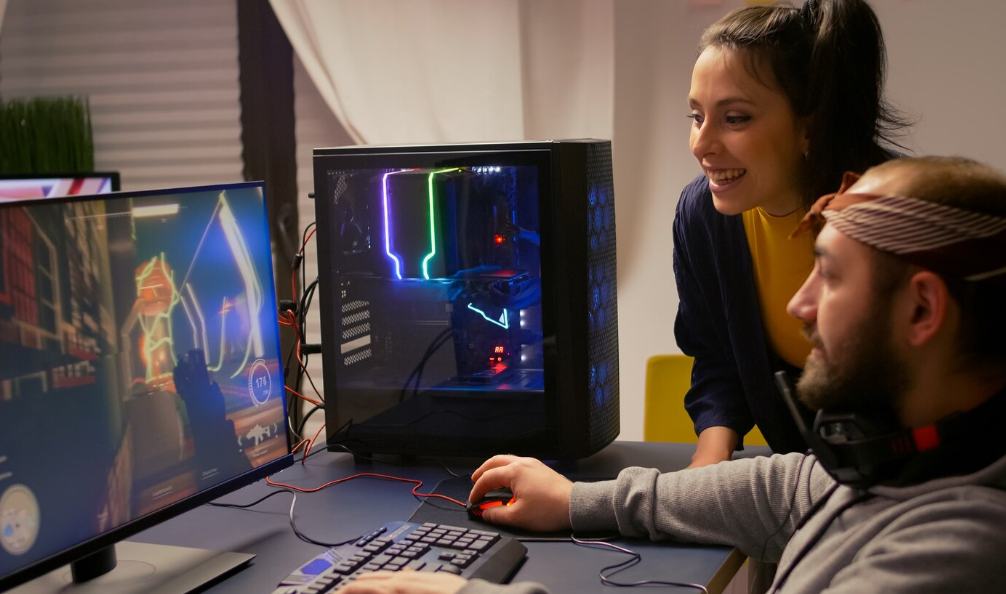
This approach creates opportunities for meaningful teamwork, strategic decision-making, and memorable gameplay experiences. By carefully designing unequal roles, developers can create cooperative environments where individual contributions become essential to collective success.
Understanding Asymmetric Multiplayer Gameplay
Asymmetric multiplayer gameplay refers to a design structure in which players experience different mechanics, abilities, information, or responsibilities within the same game.
In traditional cooperative games, participants often share similar abilities and complete comparable tasks. Asymmetric games introduce distinct roles, encouraging players to approach challenges from different perspectives.
For example, one player might operate a vehicle while another manages navigation. A third player could monitor environmental hazards, while a fourth handles communication or equipment repairs.
Although these responsibilities differ, every participant contributes toward the same objective.
The central principle is that unequal roles should create meaningful cooperation rather than unequal importance.
Why Unequal Roles Improve Cooperative Experiences
Asymmetric roles introduce variety by allowing players to contribute in unique ways. This design can strengthen cooperation because successful gameplay depends on communication and coordination.
Several benefits make asymmetric multiplayer dynamics appealing.
1. Encouraging Meaningful Teamwork
When players possess different capabilities, they must combine their strengths to overcome challenges.
A character specializing in defense may protect teammates, while another focuses on solving puzzles or gathering information. Neither role can consistently accomplish every objective independently.
This interdependence encourages players to communicate, coordinate actions, and develop shared strategies.
2. Creating Diverse Gameplay Experiences
Different roles provide unique perspectives within the same game world.
One player might experience fast-paced action, while another focuses on strategic planning or resource management.
This variety can make repeated gameplay more interesting, particularly when players can exchange roles between sessions.
3. Strengthening Player Engagement
Asymmetric mechanics can give players a clear sense of responsibility.
When each role offers meaningful contributions, participants can recognize how their decisions influence the team’s progress.
The result is often a stronger connection between individual performance and collective achievement.
Designing Roles That Complement Each Other
Effective asymmetric gameplay begins with carefully defined responsibilities.
Each role should provide distinctive abilities without becoming completely independent or unnecessarily restrictive.
Consider a cooperative exploration game featuring three characters:
-
The Navigator: Identifies safe routes, studies maps, and provides directional guidance.
-
The Engineer: Repairs equipment, manages technical systems, and solves mechanical challenges.
-
The Scout: Investigates unfamiliar locations, detects threats, and gathers important resources.
These characters approach challenges differently, but their abilities complement one another.
The navigator may discover a hidden destination, the scout can identify approaching dangers, and the engineer can restore equipment needed to continue the journey.
This structure makes cooperation a central gameplay mechanic rather than an optional activity.
Balancing Unequal Roles Without Making Them Identical
One of the greatest challenges in asymmetric multiplayer design is maintaining balance.
Because players have different abilities, balancing their experiences does not necessarily mean giving everyone equal power.
Instead, developers should focus on providing comparable opportunities for meaningful participation.
A strategically important support character may have fewer direct actions than a combat-focused character but still make decisions that significantly influence the team’s success.
Developers can improve role balance by evaluating several factors:
-
Contribution: Every role should influence important gameplay outcomes.
-
Engagement: Players should have meaningful activities throughout a session.
-
Difficulty: Complex responsibilities should provide appropriate feedback and learning opportunities.
-
Dependency: Roles should encourage teamwork without creating excessive frustration.
-
Flexibility: Players should have alternative ways to contribute when their primary abilities are temporarily unnecessary.
Balancing these elements helps prevent one participant from dominating the game while others remain passive.
Communication as a Core Gameplay Mechanic
Communication becomes particularly important when players possess unequal information.
Imagine a cooperative puzzle in which one player can see a complex control panel while another holds instructions explaining how to operate it.
Neither player can solve the challenge independently. They must describe what they see, interpret information, and coordinate their actions.
Games such as Keep Talking and Nobody Explodes demonstrate how different information and responsibilities can turn communication itself into the primary challenge.
Designers can reinforce these interactions through timed decisions, shared objectives, and carefully structured information gaps.
However, communication challenges should remain accessible. Clear visual indicators, readable interfaces, and alternative communication tools can help different players participate effectively.
Preventing Frustration and Role Fatigue
Although asymmetric gameplay creates exciting opportunities, it can also introduce frustration.
Some participants may feel overwhelmed by demanding responsibilities, while others may find their roles repetitive.
Role fatigue becomes especially problematic when players cannot change responsibilities or when particular tasks rarely influence the outcome.
Developers can address these problems through rotating objectives, evolving abilities, optional role changes, and challenges that require different combinations of skills.
For example, a support character might initially manage resources but later gain opportunities to negotiate with non-player characters or operate specialized equipment.
These changes allow the role to develop without losing its distinctive identity.
Using Technology to Support Asymmetric Design
Modern game development tools provide additional opportunities to create asymmetric multiplayer experiences.
Real-time networking systems can synchronize actions across multiple players, while adaptive difficulty systems can adjust challenges based on team performance.
Cross-platform gameplay can also support different interaction styles.
For example, one participant might use a computer to explore a virtual environment while another uses a mobile device to access maps, manage resources, or provide tactical guidance.
Such approaches can make asymmetric cooperation more accessible and expand the possibilities for creative multiplayer design.
However, developers must also consider network reliability, interface consistency, and fairness across devices.
The Future of Asymmetric Cooperative Games
As multiplayer gaming evolves, asymmetric cooperative mechanics offer developers new ways to create engaging experiences.
Future games may experiment with changing responsibilities, procedurally generated cooperative challenges, and environments that respond to different combinations of player abilities.
Artificial intelligence could also help adjust supporting characters and environmental challenges to accommodate teams with varying experience levels.
The most successful innovations will likely focus on preserving player agency while making cooperation feel natural and rewarding.
Conclusion
Asymmetric multiplayer dynamics demonstrate that effective cooperative gameplay does not require every player to have identical abilities.
By introducing unequal but complementary roles, developers can encourage communication, strategic thinking, and meaningful collaboration.
The key is creating a balanced experience in which every participant feels valuable, even when their responsibilities differ.
When thoughtfully implemented, asymmetric game design transforms teamwork from a simple multiplayer feature into the foundation of an engaging and memorable gaming experience.
Read More : Cognitive Reserve Building: Neuroplasticity Strategies to Delay Age-Related Decline