
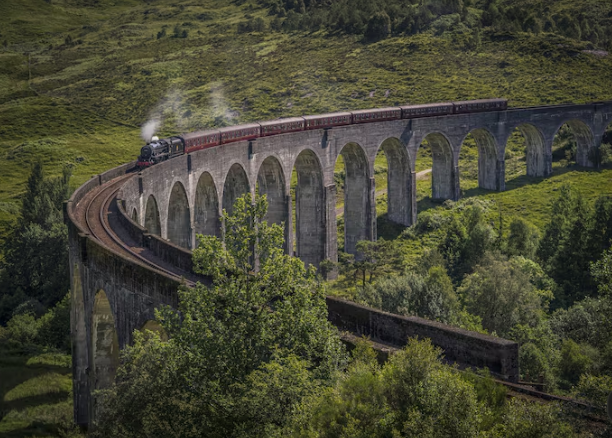
In an era defined by fast-paced air travel and rushed airport security lines, a quiet revolution is taking place on the tracks. Train travel is experiencing a major global revival. Modern travelers are moving away from the frenzy of commercial flying in favor of “slow travel”—an approach that turns the journey itself into a captivating destination.
Riding the rails offers something aviation never can: a front-row seat to changing landscapes, rich cultural transitions, and an intimate connection with the earth. From snow-capped Alpine peaks to coastal cliffs and mountain passes, scenic rail routes across continents are capturing the imaginations of global explorers.
Why the Rails Are Calling Travelers Back
The modern rail renaissance isn’t just about nostalgia; it is driven by a shift in how we view exploration:
-
Sustainable Travel: Flying carries a heavy carbon footprint. Trains offer a lower-emission alternative, letting environmentally conscious travelers explore without guilt.
-
Unmatched Comfort: Train travel provides space to move around, spacious seating, observation cars, and luxury dining options where you can enjoy local cuisines while watching the terrain unfold.
-
Downtown-to-Downtown Connectivity: Trains bypass out-of-the-way airports, dropping passengers directly into the heart of historic cities.
Iconic Routes Across Continents
Continent   │ Iconic Route          │ Highlights
────────────┼───────────────────────┼─────────────────────────────────────
Europe      │ Glacier Express       │ Swiss Alps, Oberalp Pass, Viaducts
Asia        │ TranzAlpine           │ Southern Alps, Waimakariri River
Americas    │ Rocky Mountaineer     │ Canadian Rockies, Continental Divide
Africa      │ Rovos Rail            │ Highveld Plains to Table Mountain
1. Europe: The Glacier Express (Switzerland)
Often hailed as the world’s slowest express train, Switzerland’s Glacier Express connects two iconic mountain resorts: Zermatt and St. Moritz. Across an eight-hour journey, the train negotiates 291 bridges, 91 tunnels, and climbs over the 6,700-foot-high Oberalp Pass.
Through its massive panoramic windows, passengers gaze at glacier-fed streams, dramatic gorges, and timeless Alpine villages. The highlight of the trip is crossing the famous Landwasser Viaduct, a towering stone structure that curves directly into a mountain tunnel.
2. The Americas: The Rocky Mountaineer (Canada)
Traversing the rugged landscapes of the Canadian Rockies, the Rocky Mountaineer links Vancouver with Banff and Jasper. This daylight-only luxury train ensures that passengers don’t miss a single moment of mountain scenery.
Passengers ride in glass-domed cars, looking up at sheer granite cliffs, rushing river canyons, and ancient pine forests. It is common to spot wildlife along the tracks, including grizzly bears, elk, and bighorn sheep.
3. Asia-Pacific: The TranzAlpine (New Zealand)
New Zealand’s South Island boasts one of the most visually diverse rail journeys in the world. Starting in Christchurch, the TranzAlpine crosses the fertile Canterbury Plains before climbing into the Southern Alps.
The train weaves through beech forests, crosses dizzying viaducts over the turquoise Waimakariri River, and passes through the historic Otira Tunnel before terminating near the wild West Coast in Greymouth.
4. Africa: Rovos Rail (South Africa)
For lovers of classic luxury, Rovos Rail offers a journey back to the golden age of travel. Traversing South Africa from Pretoria to Cape Town, this vintage train features restored wood-paneled sleeper coaches and formal dining cars.
The route passes through the stark beauty of the Great Karoo desert, mountain ranges, and lush Winelands before arriving in the shadow of Table Mountain.
How to Embrace the Slow Travel Philosophy
Planning a scenic train journey requires a different mindset than booking a flight:
-
Book Early: Popular scenic routes have limited capacity, especially in high-demand panorama cars.
-
Pack Light: While trains offer generous luggage allowances compared to airlines, navigating train stations with compact luggage makes transfers far easier.
-
Prioritize Daylight Routes: Choose itineraries designed for daylight viewing, or opt for sleeper trains where night travel is balanced by scenic morning arrivals.
The revival of train travel reminds us that crossing a continent shouldn’t just be an interruption between point A and point B. On the rails, every mile tells a story, and the landscape itself becomes the ultimate host.