
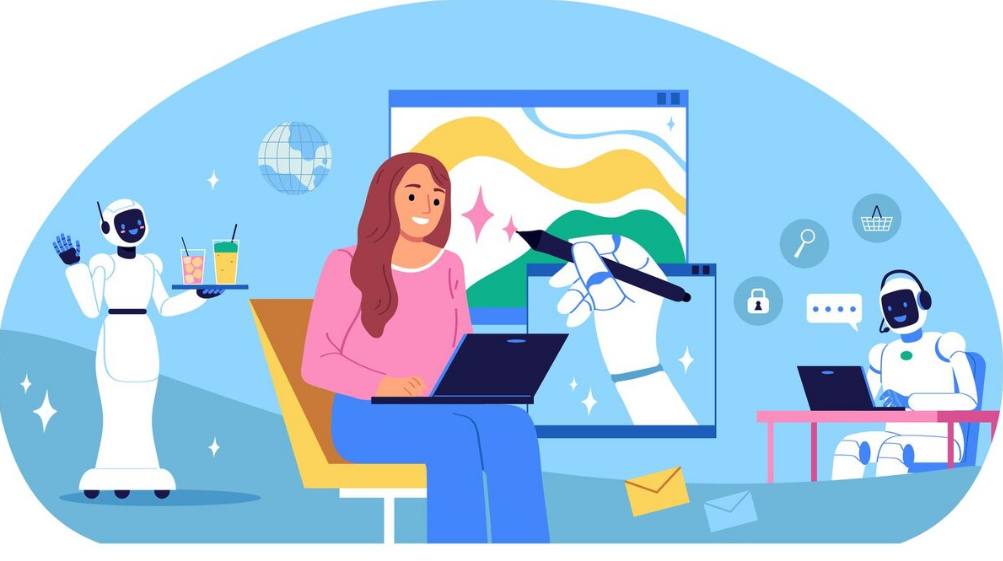
Artificial intelligence is becoming an essential part of the modern digital ecosystem. From personalized marketing campaigns to automated business communication, intelligent technologies are changing how information is created, delivered, and consumed. What once required multiple specialists and complicated production processes can now be accomplished with the assistance of increasingly sophisticated AI-powered tools.
This transformation is particularly noticeable in creative industries, where businesses and individuals are constantly looking for faster and more efficient ways to produce engaging content. Image generation, voice synthesis, automated editing, and intelligent content development are opening new possibilities for digital communication.
How AI Is Transforming Modern Content Production
Content production has traditionally involved several independent activities, including research, writing, graphic design, audio recording, and editing. Coordinating these tasks can be challenging, especially for organizations managing multiple marketing channels.
AI is helping bring these processes together by automating repetitive activities and assisting with creative decisions. Professionals can now generate initial concepts, develop visual materials, and produce supporting audio without relying entirely on traditional production methods.
These capabilities are especially useful for small businesses, independent creators, and marketing teams that need to produce consistent content while managing limited resources.
AI Image Generation Is Expanding Creative Possibilities
Visual communication has become a fundamental part of digital marketing and online publishing. A compelling image can communicate an idea more effectively than lengthy descriptions, making visual assets important for websites, advertisements, presentations, and social media.
Recent developments in generative technology are making image creation increasingly accessible. Tools such as GPT Image 2.6 represent the growing evolution of AI-powered visual generation, helping demonstrate how artificial intelligence can support more advanced creative workflows.
Modern image-generation systems allow users to describe their desired visuals through written prompts and explore different compositions, styles, and creative concepts. This reduces the technical barriers associated with traditional graphic design and gives creators more opportunities to experiment.
Businesses can use these capabilities to develop marketing illustrations, product concepts, promotional graphics, and other visual materials. Designers can also incorporate generated images into their existing workflows to accelerate the early stages of creative development.
AI Voice Technology Is Changing Digital Communication
While images attract attention, audio plays an equally important role in delivering information. Podcasts, online courses, product demonstrations, and educational videos all depend on clear and engaging narration.
This is where AI text to speech technology is becoming particularly valuable. It converts written content into spoken audio using artificial intelligence, allowing users to create voiceovers without recording every piece of narration manually.
Unlike traditional computer-generated voices, modern AI-powered systems can produce increasingly natural speech with improved pronunciation, pacing, and expression.
Some of the most practical applications include:
- Online education: Converting written lessons and study materials into audio resources.
- Business presentations: Creating narration for presentations and internal training materials.
- Digital marketing: Producing voiceovers for advertisements and promotional videos.
- Accessibility: Making written information easier to consume through audio.
- Content publishing: Transforming articles and written resources into audio formats.
These applications demonstrate how voice-generation technology can help organizations communicate information more efficiently while reaching audiences with different content preferences.
Combining Visual and Audio AI for Multimedia Experiences
One of the most exciting opportunities in artificial intelligence is the ability to combine different generative technologies into a connected creative workflow.
Consider a business preparing an educational marketing campaign. It can begin by developing written material, generate supporting visuals using AI image-generation technology, and then convert the script into narration using an AI voice platform.
The resulting assets can be combined into an informational video, presentation, or social media campaign.
This approach offers several benefits:
- Improved production efficiency: Multiple creative assets can be developed within a shorter timeframe.
- Consistent communication: Businesses can maintain a recognizable visual and audio identity.
- Greater flexibility: Content can be adapted for different platforms and audience preferences.
- Lower production complexity: Teams can reduce their dependence on extensive manual production processes.
- More experimentation: Creators can test different visual styles and narration approaches.
As these technologies become more interconnected, producing multimedia content is likely to become even more accessible.
The Business Benefits of Adopting AI Creative Tools
AI adoption is increasingly becoming a practical business decision rather than simply an experiment with emerging technology.
Companies can use generative tools to support marketing, customer education, product communication, and internal operations. Small organizations can develop professional-looking creative assets without maintaining large production departments, while established teams can use automation to improve their existing processes.
Another important advantage is scalability. Businesses that regularly publish content can use AI to develop multiple versions of creative materials and adapt them to different communication channels.
However, automation should always be supported by human review. Accuracy, originality, brand consistency, and audience relevance remain essential elements of successful communication.
Challenges and Responsible AI Adoption
Despite its advantages, artificial intelligence still presents several challenges. Generated images may require refinement, while synthetic voices can occasionally misinterpret technical terminology, pronunciation, or emotional context.
Organizations must also consider data privacy, copyright requirements, content licensing, and transparency when incorporating AI into their workflows.
The most effective strategy is to use AI as a supporting technology rather than relying on it without supervision. Human creativity and professional judgment remain important for ensuring that the final output meets quality expectations.
Looking Ahead: The Future of Intelligent Content Creation
Artificial intelligence is steadily reshaping the relationship between technology and creativity. Improvements in image generation, natural voice synthesis, and automated content production will continue to create new opportunities for businesses, educators, and independent creators.
In the coming years, creative workflows may become increasingly integrated, allowing users to move between written ideas, visual concepts, and spoken content with greater ease.
The real value of these developments lies in their ability to make communication more accessible, flexible, and efficient. By combining intelligent automation with human imagination, creators can explore new ways to share ideas and deliver meaningful digital experiences.