
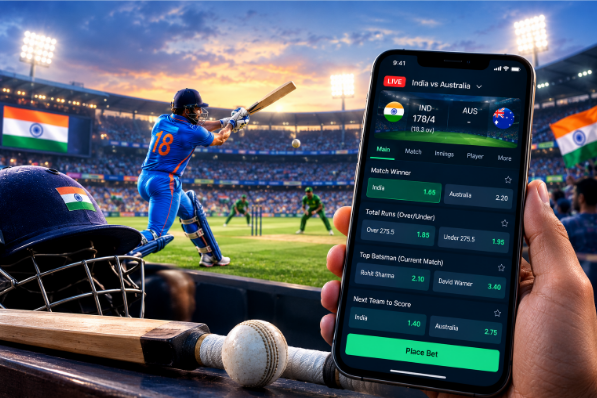
India has one of the largest audiences of cricket fans in the world. Sport has always been a cornerstone of the country’s culture, bringing together vast numbers of fans during global tournaments, national championships and local competitions. With the development of technology, the ways in which people access sports information and interact with the online environment have changed significantly.
The advent of the internet, smartphones and online payment platforms has transformed the digital entertainment market in India. However, of all sports, it is cricket that has become the most popular sport on online platforms, where there is a growing general interest in matches thanks to online results, match statistics and real-time updates.
Sports betting in India: the early years
Before the internet became widely available, sports betting was often associated with traditional bookmakers and ‘under-the-counter’ arrangements between individual punters. Cricket was one of the ‘most popular sports’, having gained popularity in India thanks to the sport’s huge global following and interest in international matches.
In the 1980s and 1990s, television broadcasts helped to expand the cricket fanbase. India’s victory at the 1983 Cricket World Cup was one of the most significant turning points in shaping the country’s attitude towards the sport.
Over time, fans gained access to a wider range of international competitions thanks to television broadcasts of the sport. Subsequently, mobile phones enabled an even faster exchange of information, allowing sports fans to share information about matches and keep track of results more conveniently.
With the advent of the internet, an entirely new digital platform emerged. Sports websites began offering match schedules, team statistics and real-time results, which gradually transformed the way the Indian audience consumed sport.
How the Internet has transformed the sports betting industry
The global sports entertainment industry underwent radical changes at the dawn of online technology. These digital technologies essentially brought with them interactive screens, statistics and an abundance of information.
Cricket played a significant role in these changes. The growing popularity of cricket live betting online matches in real time reflected an increasing demand from punters for up-to-date match information and interactive sports services.
Among the key innovations of modern digital platforms that have transformed the way spectators follow cricket, the following stand out:
- A live, constantly updated scoreboard.
- Detailed statistics for individual players and teams.
- Match and tournament schedules.
- Highlights of sporting events broadcast live, and access to video footage.
- Access to sports content via interfaces optimised for mobile devices.
These innovations have made it easier to follow cricket, particularly for those who wish to stay informed about matches whilst on the move or away from a television.
How the IPL helped shape digital sports entertainment
When the Indian Premier League kicked off in 2008, it transformed the way many people in India viewed cricket.
Its short, fast-paced T20 matches brought together star players from around the world, city-based teams and a huge television audience. Before long, franchises such as the Chennai Super Kings, Mumbai Indians and Kolkata Knight Riders became household names across the country.
The IPL also helped usher in the digital era of sports coverage. Fans began using online services to check match schedules, track players’ form and discuss the latest results. Several factors contributed to this transition:
- More tense and exciting matches
Competitions in a new sport such as T20 cricket have become more appealing to spectators.
- International popularity
The participation of well-known international players has proved to be an effective way of attracting audiences from around the world.
- Online broadcasts
The volume of digital content dedicated to cricket has grown thanks to the ability to watch televised matches via online streaming and mobile apps.
As such, the IPL has played a significant role in shaping a broader sports technology ecosystem in India.
India: another player in the digital age: smartphones and electronic payments
As India’s digital development progresses, the pace of modernisation is constantly increasing, driven by the boom in smartphones and electronic payments.
In 2016, the Unified Payments Interface (UPI) system introduced the first simplified financial transactions for everyday use to the people of India. People were no longer restricted to using traditional bank transfers alone, but could send and receive money via a mobile app.
Among the best-known Indian digital payment solutions are: PhonePe — a popular mobile payment app that supports transactions via UPI; Google Pay — a popular service for digital payments and bank transfers; Paytm — a multifunctional platform offering a wide range of payment and financial services; RuPay — an Indian card payment network; IMPs and NEFT — electronic funds transfer systems
These technologies have contributed to India’s large-scale digital transformation. However, the availability of a particular payment method does not guarantee that all online gaming services can be used legally.