
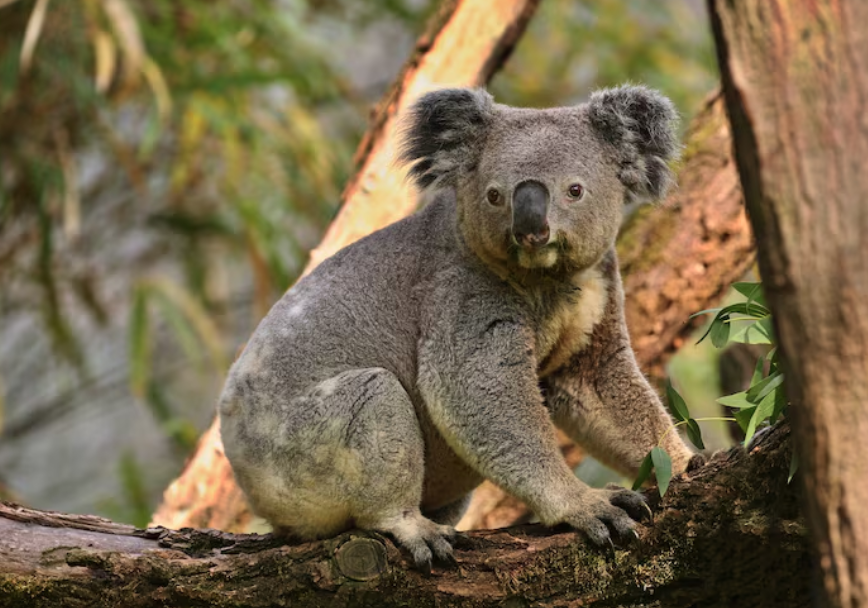
There is an unmistakable quietness that settles over an Australian eucalyptus forest just after dawn. Mist hangs low between the pale, ribbon-barked trunks of manna gums, and the air smells sharply of crushed leaves and damp earth.
High above the forest floor, nestled securely in the fork of a towering branch, a koala shifts slightly in its sleep. For nature lovers and photographers alike, witnessing these iconic marsupials within their native landscape offers a profound connection to the Australian bush.
Rather than viewing koalas in isolation, framing them against the sprawling textures, dramatic lighting, and rugged beauty of their natural scenery tells a much richer story about their survival and ecology.
The Symbiosis of Koalas and Eucalyptus Landscapes
To truly appreciate koalas in the wild, one must first understand the intricate scenery they inhabit. Koalas are arboreal specialists whose entire existence is woven into the canopy of eastern and south-eastern Australia.
From the windswept coastal woodlands of Victoria’s Great Ocean Road to the sun-drenched dry sclerophyll forests of Queensland, these landscapes are defined by towering eucalypts.
The visual character of koala habitats changes dramatically across regions. In southern states like Victoria and South Australia, koalas often inhabit cooler, denser forests filled with blue gums, swamp gums, and coastal scrub.
Here, the scenery is lush, moody, and draped in ferns and lichen. Further north in New South Wales and Queensland, the backdrop shifts toward open woodlands, rugged granite outcrops, and drier bushland where silver-grey foliage shimmers under intense sunlight.
Understanding these regional ecosystems allows observers to recognise how the animal’s thick, ash-grey fur acts as natural camouflage against weathered bark and dappled shadows.
Prime Locations to Experience Koala Scenery
Australia offers several remarkable destinations where wild koalas can be observed in breathtaking natural settings. Exploring these habitats responsibly ensures minimal disturbance to the animals while maximising opportunities to witness authentic behaviour.
- Great Otway National Park, Victoria: Located along the iconic Great Ocean Road, the Otways feature towering eucalyptus forests that meet rugged coastal cliffs. Cape Otway, in particular, is renowned for healthy wild koala populations resting remarkably close to walking trails.
- Magnetic Island, Queensland: Situated just off the coast of Townsville, this tropical island boasts northern Australia’s largest population of wild koalas. The Forts Walk winds through hoop pines, eucalyptus woodlands, and dramatic granite boulders overlooking the Coral Sea.
- Kangaroo Island, South Australia: Known as a sanctuary for native wildlife, Kangaroo Island offers pristine bushland, winding riverbanks, and dense manna gum groves where koalas thrive alongside kangaroos, echidnas, and abundant birdlife.
- Port Stephens, New South Wales: The Tilligerry Habitat and surrounding coastal reserves provide tranquil wetland and forest scenery, offering peaceful boardwalks through paperbark and eucalyptus trees.
Essential Tips for Photographing Koalas in the Wild
Capturing compelling images of koalas requires patience, technical awareness, and a deep respect for wildlife ethics.
Because koalas sleep up to eighteen to twenty hours a day, the challenge lies in waiting for brief moments of movement while balancing the harsh contrast of canopy light.
If you are looking to refine your technical skills in the field, enrolling in a wildlife photography course can help you master exposure, composition, and ethical tracking techniques tailored to Australian conditions.
- Prioritise Golden Hour Lighting: Midday sun filtering through eucalyptus leaves creates harsh highlights and deep shadows across a koala’s fur. Arrive at dawn or late afternoon when soft, directional light illuminates the canopy and brings out warm golden tones in the surrounding foliage.
- Incorporate Environmental Context: Avoid zooming in exclusively on the koala’s face for every frame. Pull back using a medium telephoto lens to include sweeping branches, peeling bark, morning mist, or distant coastal horizons, allowing the scenery to anchor the subject.
- Focus Sharply on the Eyes: When a koala wakes to groom, stretch, or feed on fresh leaves, ensure your autofocus point is locked precisely onto the nearest eye. A shallow depth of field will softly blur distracting twigs while keeping the animal’s expression crisp.
- Adjust Exposure Compensation for Bright Skies: Because koalas sit high in the trees, bright overcast or blue skies frequently sit behind them, tricking camera meters into underexposing the subject. Dial in positive exposure compensation to preserve detail in the dark charcoal and silver tones of their coat.
- Maintain a Respectful Distance: Never shake branches, make loud noises, or crowd beneath a tree to force a koala to look toward your lens. Use a focal length of at least 200mm to 400mm so you can capture natural, relaxed behaviour without causing stress.
Ethical Observation and Habitat Conservation
Documenting and exploring koala scenery carries an inherent responsibility to protect the fragile ecosystems these marsupials depend upon.
Across eastern Australia, habitat fragmentation, climate change, bushfires, and urban expansion continue to place immense pressure on wild populations. Responsible visitors stick strictly to designated walking tracks to prevent soil compaction and protect delicate root systems that sustain old-growth eucalypts.
Furthermore, sharing authentic imagery of koalas within thriving native forests plays an important role in conservation awareness.
When people see the beauty of an intact eucalyptus ecosystem—complete with glossy black cockatoos, native wildflowers, and sleepy koalas high in the boughs—it reinforces why preserving continuous wildlife corridors is essential for future generations.
For a closer visual look at how these marsupials navigate their changing forest habitats, watch the documentary Koala Country: Survival in Australia’s Changing Eucalyptus Forest, which explores their daily life and ecological challenges in the Australian bush.